United by Coffee

10 May

Saturday is World Fair Trade Day and Ten Thousand Villages (TTV) has several ways to celebrate.

As a barista at Starbucks and new volunteer at TTV, it seems like fate that we’ll close the day out with Handmade Expressions to co-host a free outdoor movie showing at Jo’s Coffee about…fair trade coffee!

Delicious Peace is a movie about Jewish, Christian and Muslim coffee farmers who decided “social justice, environmental justice, and economic justice is not enough…what’s needed is peace.” It serves as a model of not just successful organic and kosher fair trade coffee distributors helping the economically disadvantaged, but also interfaith cooperation.

I have not seen the movie, as I’m going to see it at Jo’s on Saturday, but as someone new to the fair trade world, I’m intrigued by the premise of the movie and fair trade coffee.

So what makes coffee “fair trade?” Fair Trade USA takes some of the guesswork out by serving as an intermediary that reviews and certifies products like coffee, tea, cocoa, spices and more to make sure they meet fair trade standards that are established FTUSA. Basically, those standards are the same ones that make jewelry and novelty items fair trade: 1) farmers are compensated for their labor and products so they can maintain a reasonable standard of living; 2) they have safe working environments; and 3) they sell their products directly. This allows for transparency and empowers the communities to set their own prices and build up business skills.

Another cornerstone in fair trade is that the focus is on building up the community through projects designed to bolster education, health care, and basic social needs. Since FTUSA deals with mainly agricultural products, there is the added standard of “environmentally sustainable farming methods that protect farmers’ health and preserve valuable ecosystems for future generations,” although environmentally friendly practices are common in other areas of the fair trade world beyond food.

The movie description makes sure to mention the coffee is kosher, so on a related note (and in the interfaith spirit of the movie), what makes coffee kosher? I mean, isn’t all coffee basically kosher? Generally, yes. This website from an organization that investigates and certifies kosher products is an excellent resource for not only explaining kosher as it applies to coffee, but also explaining how coffee is grown and processed.

Kosher concerns only really come into play with flavored coffee and the process of decaffeinating the coffee beans, as the chemical compound ethanol used to decaffeinate the beans is originally from a grain and therefore not kosher. Those are the main issues inherent to the coffee, but there is also the issue of the establishment selling the coffee.

“This problem stems from the halacha of marris ayin, the appearance of wrongdoing,” Star-K says. “This din states that a Jew is prohibited from doing things that others might interpret as violations of halacha.”

This is where things get tricky and it becomes a judgment call, but Star-K’s rabbis apply the standard that if the business is primarily concerned with non-kosher items, then it’s not kosher to get coffee there. If the business deals in just coffee or a mixture of kosher and non-kosher items, then it’s kosher to get coffee there.

Be sure to stop by Ten Thousand Villages on World Fair Trade Day to try some Fair Trade Certified coffee. It’s a dark, full-bodied French roast. Try it with a little bit of cream to bring out the smokiness in the flavor.

Photo Entry from 2013 Fair Trade Challenge:
Becca Ruiz poses with the fair trade
coffee section at Ten Thousand Villages

Also, don’t forget to show off your fair trade items in our World Fair Trade Day social media challenge for a chance to win a $50 gift card to the store!

- Kathryn
(Find me on twitter)

The Last Hoorah

28 Apr

Well y’all, this is it.  I’ve come to the end of another chapter of this crazy thing called life and this will be the last piece of social media gold you’ll hear from me as part of the Ten Thousand Villages family.  That’s right.  Corey, your fearless intern, is GRADUATING on May 11th and leaving Ten Thousand Villages of Austin as the Event Coordinator Intern.

Typing this blog post is bittersweet for me.  On one hand, I’m graduating college; something that I’ve put long hours and sleepless nights into for the last four years.  On the other hand, I’m leaving an amazing group of people in Austin here at Ten Thousand Villages.

32342-Troy-Community-my-emotions-gif-TUY9

Troy from “Community” knows how I feel right now.

Let me first start by saying thank you to all the amazing people I’ve worked with during my internship.  Kitty, Catherine, Jessica, Becky, and Becca were amazing from the first day I stepped in the store.  They were so welcoming, hospitable, and kind everyday I came into the store to help with the impact of fair trade.  Even when I was stressed out, sick, or just plain old tired from a long week of college they were always supportive and uplifting.  They made a “job” become fun.  Also, a thank you goes out to all the amazing volunteers that I’ve met during my internship.  I always looked forward to someone coming to the back of the store to mess with me and give me a hard time.

thank-you-i-try

Now that I have the thank you’s out of the way, I’d like to take some time to reflect on the things I’ve learned during my stay.  First the International Women’s Day event.  This event involved the most planning I’ve ever done in my life.  I swear I must’ve created at least a hundred documents consisting of nominee bios, research, ideas, and logistics for this event, but by for the most rewarding part was reading about and meeting all these amazing women around Austin that work so hard to make the world better.  IWD also challenged me to balance multiple projects at once.  Back at school I had papers and films to work on and other events like St. Edward’s Homecoming and the NCAA Men’s Basketball Championship Watch Party to plan and execute. Although this was a lot on my plate, I was able to learn how to manage my time and delegate work better.  On top of becoming a better event coordinator, I learned how to interact with people better.  During my internship I met many new and different people.  Each one of them gave me a different perspective on how people will talk to me; some were nice and sincere while other gave attitude and were rude.  But, at the end of the day, they taught me how to keep a smile on my face no matter what.

efjsdBF;

But the main thing that Ten Thousand Villages has taught me was the impact of people.  Fair Trade shows what can happen when you set aside selfish actions and think about those who might not have so much.  Knowing that I was able to help those in other countries that are not as fortunate as me really made coming to the store so much easier and more enjoyable.

indian-dancing-meme-generator-sari-for-party-rocking-cea7e5

So once again, thank you everyone for this opportunity that has taught a lot about the “real world,” event planning, and how to be a better person.  I will miss all of my new friends here, and hopefully I will see you sooner rather than later.

Corey

Fair Trade: Good for People, Good for the Planet

22 Apr

FTeverydayRecently, we focused on Mai Vietnamese Handicrafts‘ coiled magazine products and artisan group Sapia‘s work with tagua nut (the “vegetable ivory”) and orange peels. For Valentine’s Day, we took a tour through some of the hearts and roses that our different artisan groups have to offer, plus the “Double Your Love” earrings recycled from metal air freshener cans by Bombolulu Workshops in Kenya.

In celebration of Earth Day 2013, we’re introducing you to other environmental heroes and upcycling masters from South Africa, Burkina Faso, Nepal, Guatemala, India and the Philippines…

20130421_154852

Intern Corey jams on a thumb piano for the soda can critters.

Atelier de Formation et de Promotion des Artisans and Africa Home
Burkina Faso and South Africa

The “thumb piano” or Kalimba has been played throughout Africa for thousands of years. Its song was believed to draw spirits from heaven back to Earth. Because they were commonly used by traveling storytellers called griots, an indigenous translation of the word is, “that which makes walking easier.” Our thumb pianos are handcrafted by the Atelier de Formation et de Promotion des Artisans of Burkina Faso, and are hand-tuned and handcrafted from cans, wood and metal.

Victor Chiteura and Artisan George Gareta

Victor Chiteura and artisan George Gareta

The South African artisan group African Home was founded in 2002 by two women to provide employment in craft production for disadvantaged artisans. Now the group works with 500 artisans in 90 groups. Artisan Victor Chiteura, a Zimbabwean refugee, leads his team in Cape Town in the production of these soda can critters.

Upavim and Mayan Hands, Guatemala
Rebecca is holding  makeup bags woven out of plastic bags and Kathryn has on a pull tab necklace from while holding butterfly earrings made of cans

Volunteers Rebecca (L) holds cosmetic cases woven from plastic bags and Kathryn wears a pull-tab necklace while holding butterfly earrings made of cans.

Upavim is in the spotlight for its awesome ability to upcycle products into adorable and attention-grabbing accessories like these colorful butterfly earrings made of soda cans, or this regal-looking pull-tab necklace. Supporting not only women in the community, Upavim has developed a medical clinic and a daycare center with Montessori-trained teachers.

20130420_203748

Mayan Hands was established in 1989 and works with about 150 women in eight Guatemalan communities. Mayan Hands seeks to preserve the ancient Mayan weaving tradition while providing a fair work environment, and eco-conscious customers love their interesting and innovative approach to weaving with plastic bags.


Rolling out the Recycled Tire Products for Earth Day

with Ganesh Himal Trading Co. and Hope for Women!

Alice May with our tire display! We have lots of unique recycled-tire products from Ganesh Himal of Nepal, Sapia of Colombia, and Noah's Ark of India.

Alice May with our tire display! We have lots of unique recycled-tire products from Ganesh Himal of Nepal, Sapia of Colombia, and Noah’s Ark of India.

Improperly discarded tires impose huge threats to our health and the environment. Tires become a breeding ground for disease-causing pests, and their incineration and decomposition release toxic chemicals into the atmosphere.

Groups that have mastered the art of stylishly upcycling tires include Ganesh Himal, an American importer that works mostly with Nepalese women and Tibetan refugees, and Hope for Women, a collective of women artisan groups in El Salvador, India and Colombia. Hope for Women also works with Sapia, which designs the ReStyle line of bracelets, wallets, and bags crafted from tires.

Rosa, a Hope for Women artisan: “I think the sky is the limit for me. It doesn’t matter that I didn’t have the chance to study when I was young. With this work, I know I will be growing everyday and I can take care of myself and my family.”

20130407_153723

Mother and daughter volunteers Carmen and Eva display some recycled bike products: a clock, frame, bottle opener, and a birdhouse made of weaved candy wrappers!

Noah’s Ark International Exports
Moradabad, India

In 1986 Samuel Masih founded Noah’s Ark in a family home in hopes of preserving the handicraft traditions of India, and it provided fair work for artisans at risk of exploitation. Today Noah’s Ark represents 49 artisan groups, employing over 500 artisans who all make fair living wages (which are 10%-15% higher than the average wage of the local economy). In addition to providing steady incomes and a safe work environment, Noah’s Ark developed the NGO Noah’s Ark Handicrafts and Artisan Welfare Society, which oversees four social welfare programs.

The Women’s Multipurpose Co-op
Baguio City, The Philippines
Volunteers Jessica (L) and Teresa with some of our coolest recycled newspaper products. The Women's Multipurpose Co-op also makes products from juice boxes, candy wrappers and chip bags.

Volunteers Jessica (L) and Teresa with some of our coolest recycled newspaper products. The Women’s Multipurpose Co-op also makes products from juice boxes, candy wrappers and chip bags.

The Women’s Multipurpose Co-op was established in the Philippines to provide employment for women struggling during grim economic conditions following the 1990 Luzon earthquake, the 1991 Mt. Pinatubo eruption, and the subsequent abandonment of the Clark Air Base by the American military. The Co-op was originally a group of 18 women pooling their resources to aid each other with training, product development, marketing, and savings and loans. After developing a line of products made of recycled materials like newspapers, juice boxes, chip bags and candy wrappers, the Co-op has expanded from the original 18 to 33 women, with an additional 200 artisans working on transforming trash into treasure!

multi

Women’s Multipurpose Co-Op artisans working on a handbag woven from snack bags

Thank you for accompanying me throughout the world of fair trade upcycling! All over the world, people are realizing the dire situation of our planet and are taking a stand against wastefulness and destruction through the creation of beautiful crafts.

As author E. Knight said, “Waste not the smallest thing created, for grains of sand make mountains, and atomies infinity.”

Love,

Becca

Quote

Celebrating 103 Years of Phenomenal Women

7 Mar

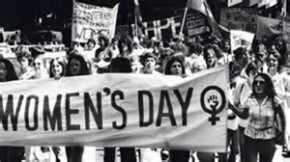
The 103 International Women’s Day  is Friday, March 8th, and Ten Thousand Villages of Austin is celebrating all week with events at our store every night this week until 9 pm.

First, a little history

In 1909, the first National Women’s Day was celebrated in America in accordance with a Socialist Party declaration on February 28th. A year later, the second International Conference of Working Women met in Copenhagen, Denmark. The conference had over 100 women from 17 different countries, representing working women’s clubs, unions, and socialists. They all voted in favor of an idea presented by German advocate Clara Zetkin for an International Women’s Day for women all over the world to fight for the rights to equality, voting and holding office.

clarazetkin

Clara Zetkin, the mother of International Women’s Day

200px-Frauentag_1914_Heraus_mit_dem_Frauenwahlrecht

The first day was celebrated in Austria, Denmark, Germany and Switerland on March 19 in 1911; in 1913 it was decided that the date should be moved to March 8th, and has been celebrated on this day since 1914. March 8th is now a recognized holiday in 27 countries, including Afghanistan, Burkina Faso, Cambodia, Russia, Uganda, and Vietnam.

Much progress has been made over the past century; however, the fact remains that women are still paid 30-40% less than men for comparable work. Seventy percent of fair trade artisans are women; the income generated by these women is often the sole income for the woman’s family, and with the fair wage provided by fair trade jobs, women are investing in the education, health, and future of their children, thus ensuring a more promising future.

Africa

Ngong Hills, Kenya

kenya_ngong_hills_namayiana_artisan_norparakuo_musunku_-_working_with_group_for_eleven_years_4

Namayiana means “we are blessed” in Maa

Namayiana was started in 1986 by a group of women of the  Maasai ethnic group of Kenya and Northern Tanzania. The women of Namayiana make beaded jewelry, a tradition that goes back to when “the first Maasai was born.” The Maasai culture places a strong emphasis on body painting, ornamentation and modification to help identify and differentiate individuals. The colors of the beads of the jewelry have special significance: white is peace, blue is water, red is warrior.

Maasai society is strongly patriarchal, with decision-making in the hands of elder men.  The women of Namayiana came together to try to create a way for their children to go to school. Agnes, a Namayiana artisan who recently learned to drive a car, explains:

“We decided as women to own everything and work among ourselves. After driving the car, I came to know that anybody can do anything. I never went to school, but because we have educated our children, we look for a bright future.”

Dzivarasekwa, Zimbabwe

batrirani

Batsiranai translates to “helping each other” in Shona, the local language. Their motto is “Batsiranai has made us fat and fatter!”

Batsiranai Craft Project was formed in 1998 as a support group of 14 for mothers of disabled children. In Zimbabwe, the disabled and their families are often shunned from society and extended family, forcing many into extreme poverty. When the 14 women realized their shared talent for embroidery, they decided to create a handicraft business that would provide income to support their families. Since 1998, the success of the business has allowed Batsiranai to expand to 100 members, and purchase two houses used as a daycare center, physical therapy center, office and work space, and housing for three families. They are managed by a committee of seven who are democratically elected. They are members of the World Fair Trade Organization and the Zimbabwe Parents of Disabled Children Association. Ten Thousand Villages sells “Sharing Dolls” from Batsiranai: Each time a doll is purchased, its twin is given to a child affected by HIV/AIDS.

South Asia

Dhaka, Bangladesh

Corr-The Jute Works: Christian Organization for Relief and Rehabilitation

Corr-The Jute Works: Christian Organization for Relief and Rehabilitation


In 1971, Bangladesh suffered a brutal genocide, leaving many of the surviving women destitute and alone. CORR- The Jute Works  was founded in 1973 to provide job opportunities to uplift and empower the mothers, daughters, and sisters of this ravaged nation. CORR has hired more than 4,000 women regardless of their ethnicity, religion, or caste level. Many women work from their own homes and self manage by democratically electing a president and a secretary to distribute work amongst their group. If a woman is having a particularly hard time financially, this is considered in the distribution of work. CORR has also established a number of community welfare projects like installing sanitation in artisans’ homes, building wells to provide pure water, offering financial help with medical emergencies, and starting health programs for pregnant women.

Artisan Haricha Begum, who has worked with CORR since 1980, says:

“My dream came true. My sorrows have all gone and my hope has been fulfilled.”

East Asia

San Patong, Thailand

grassroots hq co. ltd

Grassroots HQ Co. ltd

Grassroots HQ Co. ltd is an alternative trade organization that markets for Thai cooperatives, like White Lotus, whichworks to empower and employ women in San Patong, Thailand. San Patong is a very poor area where women are often lured or sold into prostitution. This area also has a very high rate of HIV infection. Grassroots provides AIDS education, awareness and training for care of those affected by AIDS. White Lotus hand-makes beautiful batiked paper from mulberry leaves, which are renewable resources.

Middle East

Galilee Region, Israel

Sindyanna of galilee

Sindyanna of galilee

Sindyanna of Galilee is a women-led nonprofit established in 1996 to empower Arab women in northern Israel, as well as olive farmers and other artisans in Palestinian Occupied Territories. Sindyanna strengthens the economy of the Arab-Palestinian population and emphasizes cooperation between Arabs and Jews. It provides maternity and retirement benefits, educational projects, and organizes a summer camp for artisans’ children. The name of the organization is a reference to the Palestine Oak, symbolic for its endurance, stability and of the Arab population who remained in Israel. On March 8th, the Arab and Jewish women of Sindyanna will meet in Tel Aviv with other organizations  to march for equality and celebrate International Women’s Day together.

Latin America

Santiago, Guatemala

8821.jan_11.dolores_quievac_sapalu.8821110.09

Creaciones Chonita

Creaciones Chonita is a small business located on the coast of Lake Atitlan and was founded in 1981 by Concepción Sojuel Mendoza, an indigenous Mayan woman who lost her husband in the violence of the Civil War and needed a way to support herself and her children. Since 1981, Creaciones has grown to support 45 widows and young women full-time and 35 part-time. The women make a fair wage for their work, and a percentage of the proceeds are put aside for social projects, such as a scholarship fund for needy children, and a program that provides monthly food packages to elderly widows. Additionally. Creaciones has taken part in building a school for 225 children and is working on a senior citizens center.

Guatemala City, Guatemala

Unidas Para Vivir Mejor: United for a Better Life

Unidas Para Vivir Mejor: United for a Better Life

UPAVIM was started in 1988 to provide health and education services for women on the outskirts of Guatemala City living in a squatter community called “La Esperanza.” The women of UPAVIM are mothers, homemakers, widows and in many cases the sole breadwinners of their families. The women must first volunteer 32 hours, and continue to volunteer two hours a week at the UPAVIM community care center. In addition to crafts, UPAVIM has started other small businesses such as a bakery, pharmacy and an internet center. Through UPAVIM, donors also fund scholarships for 430 elementary and junior high students. Profits also go to running a Montessori Infant Education Center and an Alternative Elementary School.

womens day

So, in the spirit of all women, let’s share in the success of our sisters everywhere, and as we move forward remember all that our fore-mothers have fought for and accomplished. Keep fighting for equality and respect for all women of the world in their honor!

suffragist

With Love,

Your Sister,

Becca

Ten Thousand Villages Featured in CultureMap

5 Mar

Extra! Extra! Read all about it…

CultureMap | 2013 IWD

Announcing the Finalists in Austin’s 5th Annual International Women’s Day Awards

1 Mar

IWD AwardsTen Thousand Villages celebrates women locally and globally with our 5th Annual International Women’s Day Awards on Friday, March 8th, 6-8pm at our fair trade store (1317 S. Congress). The Ceremony will be hosted by 2010 IWD honoree Sara Hickman, who will present awards to three finalists and a winner from each category. “Through actions and influence these women are distinguishing Austin as a city that’s leading in social change,” Store Manager Kitty Bird said. The Finalists are:

 Humanitarian
   • Leslie Beasley – Founder, Open Arms 
   • Kay Firth-ButterfieldConsortium for Street Children
   • Christy Pipkin – Executive Director, The Nobelity Project
Environmentalist
   • Paige Hill
– Founder, Urban Patchwork Neighborhood Farms
   • Elisabeth Welsh – Program Director, Austin Youth River Watch
   • Sarah Young – Youth Director, Discover Green – YEL

Animal Advocate
   • Karen Cole
– Founder, Lizzy’s Hospice
   • Liz ParkerEmancipet Board & Austin Pets Directory Publisher
   Sheila Smith – President, Shadow Cats Rescue

Finalists were chosen by a judges panel comprised of previous IWD winners and leaders in Austin’s nonprofit community: Brandi Clark Burton, Founder of Austin EcoNetwork; Meg Goodman Erskine, Executive Director of Multicultural Refugee Coalition; and Abigail Smith, Chief Animal Services Officer for the City of Austin.

“The judges had incredibly tough decisions to make,” Kitty said. “At the same time, it’s inspiring to learn about so many amazing women in our community who are making meaningful social impacts. This event is about celebrating all of them.”

For five years, Ten Thousand Villages has been celebrating and honoring women at this time of year. One day isn’t enough, so Ten Thousand Villages celebrates International Women’s Day for a week with cultural events and benefit shopping nights that support other nonprofits, culminating in the IWD Awards Ceremony on March 8th.

All events are free:

Monday 3/4Well Aware
5-9 pm:
Out of Africa
See Nobelity Project’s Building Hope documentary, enjoy traditional African food, and get 10% off all fair trade products handmade in Africa. A portion of all purchases supports local nonprofit Well Aware, which brings clean drinking water to rural villages in Kenya.

Tuesday 3/5
10:30-11:30 am: FREE Yoga Class! Courtesy of Mimi Curry at beradiantbliss.com
5-9 pm: STender Heart Foundationouth Asian Bazaar: Mehndi, Mandalas & More
Sari wrapping, henna art, music, food and 10% off all fair trade products handmade in India, Nepal, Pakistan, Bangladesh, Sri Lanka, Indonesia, Philippines, Thailand, Laos, Vietnam and Cambodia. A portion of all purchases supports Austin-based Tender Heart Foundation, which helps bring education and socioeconomic development to rural communities in Northern India.

Wednesday 3/6
5-9 pm: Latin America Romance
Come hear Latin American music performed live and get a 10% discount on all fair trade products handmade in Nicaragua, Guatemala, Ecuador, Chile, Haiti, Peru, Mexico, Bolivia, El Salvador, Honduras or Colombia.

Thursday 3/7
5-9 pm: 1st Thursday on South Congress
Ten Thousand Villages stays open late for this popular monthly block party that lets Austin fly its weird flag. This event is about as Austin as it gets — don’t miss it!

Sara Hickman

Friday 3/8
6-8 pm: 5th Annual International Women’s Day Awards – Hosted by Sara Hickman! This night is all about celebrating women who have made exceptional contributions in our community and who make a difference in the lives of those around them. Limited seating; RSVP required: Facebook or email.

It’s going to be a week about social change and powerful women. Hope you will come and celebrate with us — and share this news with your friends!

With Love From Vietnam

19 Feb

Hello Friends of Fair Trade!

When we talk about Fair Trade, we can include a variety of facets. First and foremost, Fair Trade means a fair price for the artisan, but Fair Trade also encompasses nine other principles recognized by the World Fair Trade Organization.

The 10th principle on that list is Respect of the Environment, and Mai Vietnamese Handicrafts exemplifies this by supplying recycled coiled magazine products. Mai Vietnamese Handicrafts was founded in 1991 as a program to assist Vietnamese street children who could not pay for school tuition and lacked the necessary legal papers. Since schooling in Vietnam is now offered for free, Mai has expanded its focus to marginalized ethnic minorities and disadvantaged women in rural regions. Mai works with several craft production companies by providing marketing and design assistance, and 90 percent of the 1,669 artisans working for Mai are women. Some of the proceeds from the sales of handicrafts still go to the program for children.

hien

The small business that makes the coiled magazine products, GAP Co. Ltd. based in Ho Chi Minh City, was founded and began working with Mai in 2006. The popularity of these products has allowed this small business to expand from 15 employees to 20 workers coiling paper in the workshop and 40 workers folding paper from their home. The paper comes from excess printings, purchased from a publishing house, that would otherwise be thrown away. Artisans use traditional basket-making techniques to create super fun, contemporary, eco-friendly coiled magazine bowls. Check out these new, smaller “World News” bowls:

20130216_171200

You can also enjoy some of Mai’s other amazing products — like this Silk Market Jacquard Pillow, which was recently featured in Austin Woman magazine’s “Home” issue! It’s also available as a cool circular yoga pillow.

Yoga pillow

Silk Jaquard Pillow_TTV

Mai’s products are incredibly diverse, too. They also paint these koi fish paperweights by hand:

5405_lacquered_stone

               20130216_171234

And here’s everyone’s favorite measuring tape:

20130216_171416

Lastly, don’t forget these fun and deliciously fragrant cinnamon bark boxes:

Cinnamon Bark Box

With Love,

Chief Becca

Follow

Get every new post delivered to your Inbox.

Join 672 other followers

%d bloggers like this: